Author Meetups & Lectures
Upcoming Events ↓
From Hadassah to Shura: When a Profession Meets Its Dark Side
On medicine, mission, and the training you never knew you were undergoing
In 2001, a first-year dental student at Hadassah sat in class and listened to one of the professors give a lecture on dynamite. "When victims of a bombing are brought to you," the professor said, "you'll need to be able to tell them how it happened..." Twenty-two years later, that same student arrived at the Military Rabbinate's Camp Shura — and discovered that each one of those twenty-two years had meaning. In this lecture, Dr. Vladi Dvoyris examines the relationship between a profession and the person practicing it. How fifteen years of work in the treatment chair — seemingly light-years removed from identifying the fallen — were precisely what prepared him for the mission October 7th placed upon him. The lecture reveals the "hidden training" that every medical profession imparts to its practitioners: the ability to hold emotion at a distance, to work with hands that know before the mind understands, and to find precision in situations that are anything but precise. The lecture is personal and candid, free of pathos, and interwoven with readings from the book. Especially suited for: medical and paramedical teams · education and training organizations · professional conferences · management development programs · university alumni groups
What the talk covers

You Can Take the Child Out of the Soviet Union
An Israeli immigration story, from Ukraine to Camp Shura — through four generations of medicine
Vladi Dvoyris's great-grandmother learned to treat teeth without anesthesia at a women's college in the early twentieth century. His grandfather was a doctor. His grandmother was a doctor. His father was a doctor. When Vladi arrived at Camp Shura on the morning of October 8, 2023, the first thing he did was take a small tin of Golden Star from his pocket — the Vietnamese balm that Soviet households always keep on hand, just in case — and smear a little under his nose. "You can take the child out of the Soviet Union," he later wrote, "but you can't take the old Soviet habits out of the child." In this lecture, Dr. Dvoyris unfolds his personal story as an immigration story: from a childhood in Soviet Ukraine in the 1980s, through immigration to Israel in the early 1990s, to the moment when that same child — thirty years later, a forty-year-old reservist dentist — finds himself on the casualty identification team at Shura. The lecture is seasoned with humor, childhood memories, and a warm, at times ironic, look at cultural difference. Especially suited for: communities of immigrants from the former Soviet Union and the 1.5 generation · immigration and absorption organizations · cultural centers and book clubs · schools and identity education programs · community cultural evenings
What the talk covers
Writing What Cannot Be Told
On writing as healing, and on the truth that can only be spoken through story
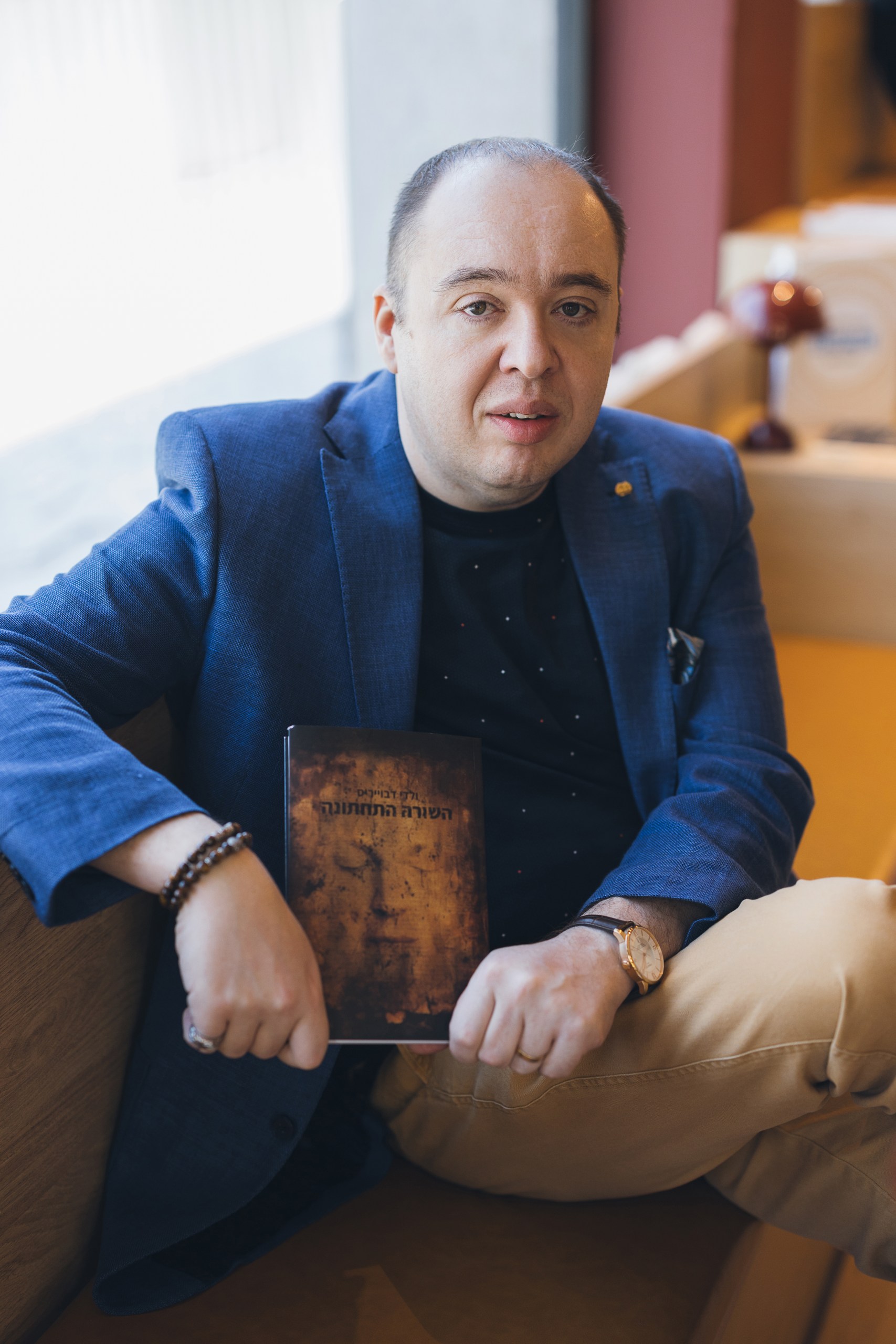
When Dr. Vladi Dvoyris returned from eleven weeks at the Military Rabbinate's casualty identification facility, people asked whether he was going to write about it. A diary already existed, kept throughout his reserve duty — but nearly two years passed between that diary and a book. In this lecture, Dr. Dvoyris returns to the writing itself: to the question of why he put off turning the diary into a book, and to the nights he spent trying — discovering that journalistic writing came out dry, that writing from emotion made him lose himself, and that the third path, the story, was the only one through which the truth could pass. The lecture is an inside view of writing as a therapeutic tool, and equally as a key to uncovering emotional truth. The lecture combines readings from the book, behind-the-scenes accounts of the different stages of writing, and an open conversation about the role writing plays in personal, family, and national processing. Especially suited for: book clubs and literary circles · writing workshops · mental health and therapeutic professionals · trauma survivor and support groups · teachers, educators, and counselors · literary evenings at libraries and cultural centers
What the talk covers
I Visited the Death Star and Came Back to Tell
On devotion, coping with trauma, and conclusive identification as sacred work
On October 7, 2023, reality in Israel changed. That Saturday night, Dr. Vladi Dvoyris was called up for reserve duty at Camp Shura, the Military Rabbinate's base — a place he came to call the Death Star. For eleven weeks he carried no weapon, only the professional hand instruments of a dentist, working to identify those killed in the massacre and the war. In this remarkable lecture, Dr. Dvoyris offers an honest and deeply moving window into the world of someone who came face to face with the horrors of the massacre, with nothing between him and them. The lecture — which has become one of the most sought-after talks on mental resilience in this period — is not only personal testimony, but a journey that raises fundamental questions about devotion, about functioning under extreme pressure, and about finding meaning even in moments that defy explanation. Compelling, candid, and inspiring, the lecture is suited to organizations seeking to strengthen their people and to offer them meaningful insight into mental resilience, coping with personal and national crisis, and finding meaning in the hardest moments. Especially suited for: businesses and hi-tech companies · HR and employee wellbeing teams · leadership and resilience conferences · educational and community institutions · public sector and security organizations · support programs for bereaved families
What the talk covers
לתיאום מפגש - שלחו דואר אלקטרוני לכתובת vladi@dvoyris.com
Upcoming Events
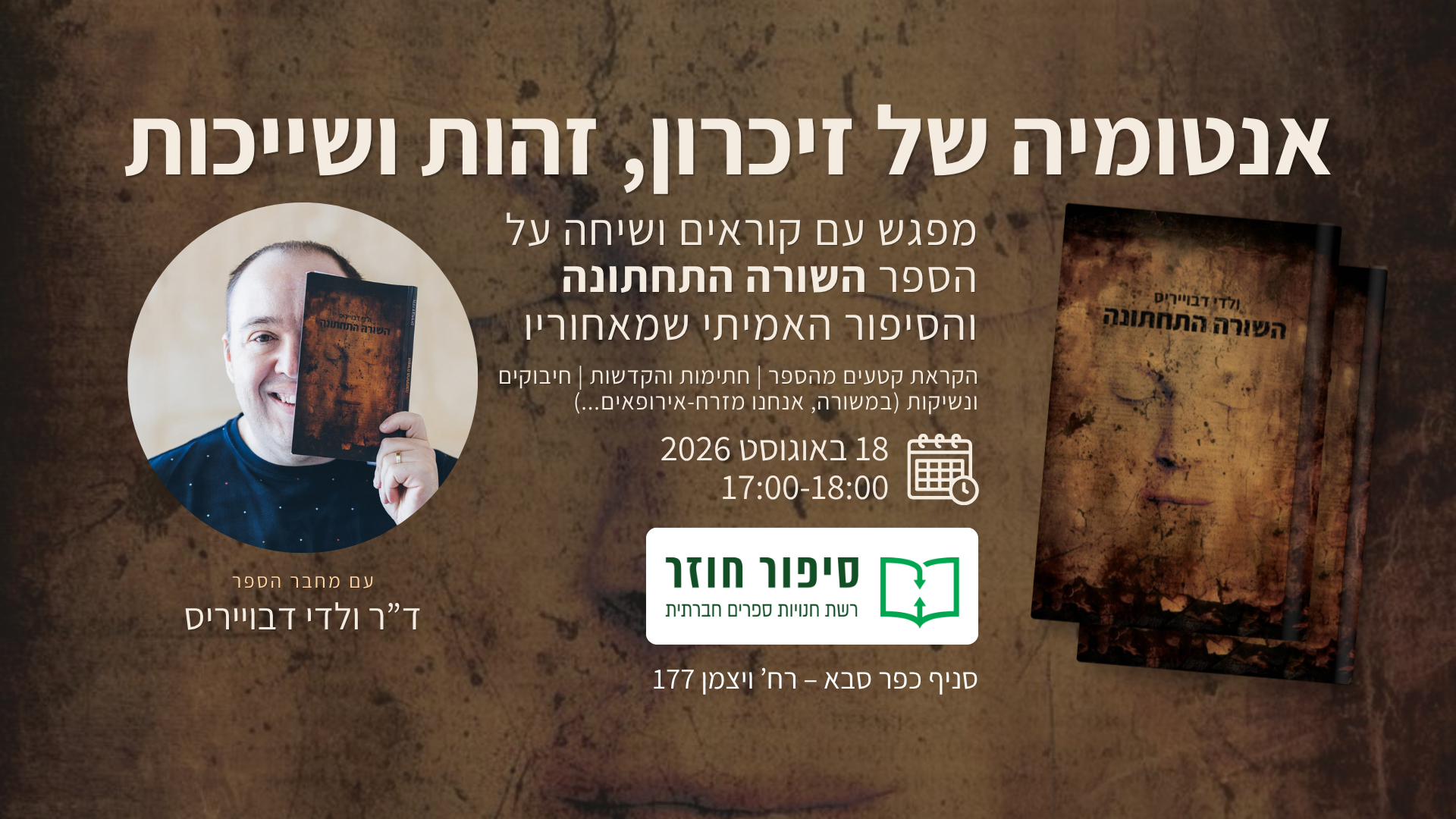
לכתוב את מה שאי-אפשר לספר - מפגש סופר והקראה
📅 August 18, 2026
📍 Sipur Hozer Bookstore - Weizmann 177, Kfar Sava
בהרצאה זו חוזר ד"ר דבוייריס לתהליך הכתיבה עצמו: מהשאלה למה דחה את הפיכת היומן לספר, דרך הלילות שבהם ניסה לכתוב — וגילה שהכתיבה העיתונאית יוצאת יבשה, שכתיבה רגשית גורמת לו לאבד את עצמו, ושהדרך השלישית — הסיפור — היא הדרך היחידה שבה האמת מצליחה לעבור. ההרצאה היא מבט מבפנים על הכתיבה ככלי טיפולי, אבל גם כמפתח לחשיפת אמת רגשית. ההרצאה משלבת קטעי קריאה, סיפורים מאחורי הקלעים על שלבי הכתיבה השונים, ושיחה פתוחה על תפקיד הכתיבה בעיבוד אישי, משפחתי ולאומי.
Free entry
Register